Reverse vending machines: The benefits of automation for retailers in deposit return schemes
As deposit return systems (DRSs) gain traction worldwide, retailers and other sites (from schools and airports to transport stations and amusement parks) are becoming the locations where consumers return their drink containers for recycling. As such, sites for drink container collection are seeking ways to optimize the collection process for bottles and cans.
Automation through collection technology called reverse vending machines (RVMs) is a proven way to make collection more convenient, both for the consumers returning containers and for the sites serving as return points.
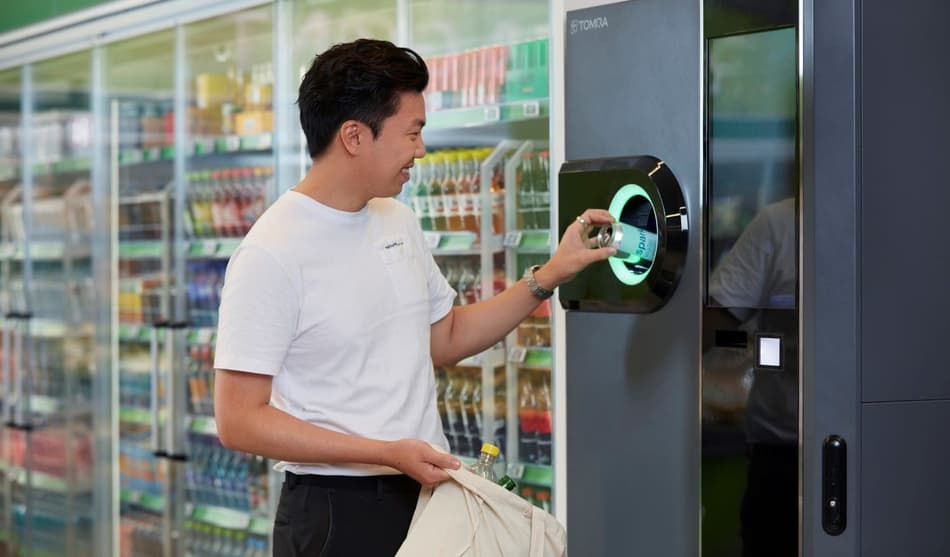
By automating the collection process, RVMs provide retailers with a faster and more efficient method of handling containers. These machines streamline the recycling experience, enabling retailers to meet legal requirements of deposit return systems, while also ensuring customer satisfaction.
Even “voluntary” collection points, stores where the collection of containers is not legally mandated (for example, those under 200 square meters in size), often favor RVM solutions. An example of this preference is seen in Slovakia, where 60% of voluntary collection sites decided to offer RVMs.
Global reverse vending leader, TOMRA Collection, explains how automation through reverse vending enhances return sites’ business operations and ensures a seamless recycling experience for their customers.
How business benefits from reverse vending machines
The adoption of automation through reverse vending machines provides several key benefits for retailers:

1. Space saving
By offering RVMs, retailers can effectively optimize their floor space. These machines store and compact (crush) bottles and cans, greatly reducing the storage area required for containers in the store. By intelligently utilizing the available space, retailers can maximize their front-of-house retail area or backroom storage space, for a more spacious and well-organized shopping environment for customers.
Reverse vending machines themselves can also have a small footprint. For example, TOMRA M1 is an RVM with a footprint of just 0.6 square meters, but despite its compact dimensions can handle all three materials most common in deposit return systems (PET plastic, metal, and glass). RVMs like TOMRA M1 are particularly advantageous for busy stores with limited space, as they allow retailers to automate the recycling process without sacrificing valuable floor space.

2. Time saving
Reverse vending machines automate bottle verification and counting, to streamline operations and improve efficiency for retailers. With these machines, store employees are freed from the burden of manually handling and checking each container, allowing them to focus on other tasks that support productivity and customer service. This time-saving automation ensures a better shopping experience for customers while saving valuable staff time throughout the day.
3. Reduced customer wait times
Reverse vending machines offer a key advantage by significantly reducing waiting time for consumers, compared to manual returns of containers. Research conducted by TOMRA found that 31% of respondents said they would go to another store to return their bottles and cans if there is a long queue or returns are not available.
4. Store loyalty and in-store spending
Automation and quality reverse vending increase supermarket foot traffic and help attract store visits. The above research also found that a well-functioning reverse vending area was considered the third-most important criteria for recyclers when choosing where to return their drink containers (after the store being the one where they normally shop or close to home). Well-functioning reverse vending was even more important than easy parking. Further, 87% of respondents put their deposit refund towards grocery purchases at the store where they return containers; this underscores the value of attracting customers through high-quality container return facilities, creating a positive customer experience and fostering loyalty.


5. Accuracy and system integrity
TOMRA's reverse vending machines capture up to 1,500 photos per second of each returned container, along with assessments of shape, weight, and material. These checks ensure accurate payout of deposits and prevent human error that may occur during checking and counting drink containers by hand.
Through these checks, reverse vending machines act as a safeguard against fraudulent activities, such as attempts to return the same package multiple times. The increased accuracy provided by TOMRA's reverse vending machines ensures the proper handling of deposit refunds, and contributes to a reliable system.
6. Data collection capabilities
RVMs offer retailers and other return sites valuable data collection capabilities that enable them to optimize their operations and make informed management decisions. By leveraging weekly data obtained from their stores, return sites can maximize the efficiency of recycling efforts and enhance the performance of RVMs. This data can be used to plan and execute operations more efficiently, such as identifying usage patterns for smart staffing and improved management, resulting in a higher return on investment and reduced queuing time for customers.
Additionally, cleaning and bin handling reports can help identify areas where staff training can improve RVM performance, ultimately enhancing the overall customer experience.

7. Digital recycling experience
Each container returns session can be a chance to engage customers by offering a digital recycling experience. For example, reverse vending machines can offer recyclers the on-screen option to receive their deposit refund as a digital voucher, via electronic transfer, or even to donate their deposits to local charities (where available) – instead of the typical paper voucher.
TOMRA Collection APIs integrate the TOMRA reverse vending system into retailers' digital ecosystems. The TOMRA Digital Payout API enables app integration for paperless bottle returns, refunds, and in-store loyalty points. Additionally, the TOMRA Status API provides real-time RVM status updates for prompt issue resolution. With the TOMRA Consumer Sessions API, data from recycling transactions is securely stored and instantly retrievable. Lastly, the TOMRA Volume by Supergroup API offers a daily count of container types returned in each store.
8. Higher handling fee per container
In some regions, retailers are paid a handling fee per container returned, to mitigate the cost of implementing automated collection. Compensation is set by DRS operator with the aim of encouraging cost-efficient investments by the retailer. In some countries, such as Norway, a higher handling fee is awarded to retailers that use compacting RVMs rather than manual redemption, since compacted containers mean fewer trips for the DRS operator to retrieve the containers from stores.
A handling fee thereby compensates retailers and redemption center operators for serving as a return point. As such, retailers can earn revenue from their collected containers, and effectively manage the costs associated with implementing reverse vending machines while ensuring the financial sustainability of their recycling efforts.
9. Corporate social responsibility credentials
Offering a reverse vending machine is one way that retailers can actively participate in the circular economy. By serving as return points, stores gain an opportunity to help send for recycling a retail product that can otherwise end up as waste or litter. By investing in automation and a convenient return solution, retailers showcase their dedication to recycling and the environment, fostering loyalty and trust among a customer base that is becoming increasingly environmentally conscious.
Return points can take this a step further by offering the option for recyclers to donate their deposit refunds to charity (where available). By demonstrating a commitment to the community, stores can drive loyalty from those customers that choose to donate, promoting social responsibility and community involvement.

Costs vs benefits: is a reverse vending machine right for your grocery store?
Although there are costs to buy or rent a reverse vending machine, there are also costs involved with not automating. For example, costs such as staff time spent on manual container handling and counting, space in store taken up with container storage, and losing customers to other stores with more convenient container return solutions. price factors for reverse vending machines.

Automated recycling systems for grocery stores and other return locations
Reverse vending machines offer several benefits for retailers and other sites serving as return points for drink container recycling. They optimize floor space, save time by automating bottle verification and counting, and ensure accuracy in handling deposits. RVMs also provide a great recycling experience and great customer experience, turning satisfied recyclers into loyal customers. Additionally, RVMs provide valuable data collection capabilities that enable informed decision-making and strategic planning. By leveraging RVMs, retailers contribute to a more sustainable and efficient recycling system.
Frequently asked questions

Reverse Vending Machine Guide

Our Offering
