
Cameras
As the first to introduce camera with pulsed LED technology in free-fall and on-belt sorting, TOMRA develops camera-based imaging systems optimized for food sorting and grading. Whether you use a bulk sorter, lane grader, or do sampling for QC, there is a camera-based solution available.
Why choose a sorter with camera-based imaging system?
Cameras typically have one of the lowest cost of ownerships for sensing technologies along with being known for their stability and flexibility when incorporated into a suitable imaging system such as TOMRAs pulsed LED illumination platforms. What's more, cameras offer a vast range of capabilities and are suitable for a range of applications including to identify foreign materials, sort/grade on color, size, shape, and defects.
Our optical sorters include camera systems like:
- Pulsed LED hyperspectral/NIR cameras
- Multispectral imaging
- Enhanced infrared imaging (InGaAs cameras)
- High resolution cameras
- Surround view/multi-angle cameras
Learn more about the value of these imaging systems for food sorting further down the page.
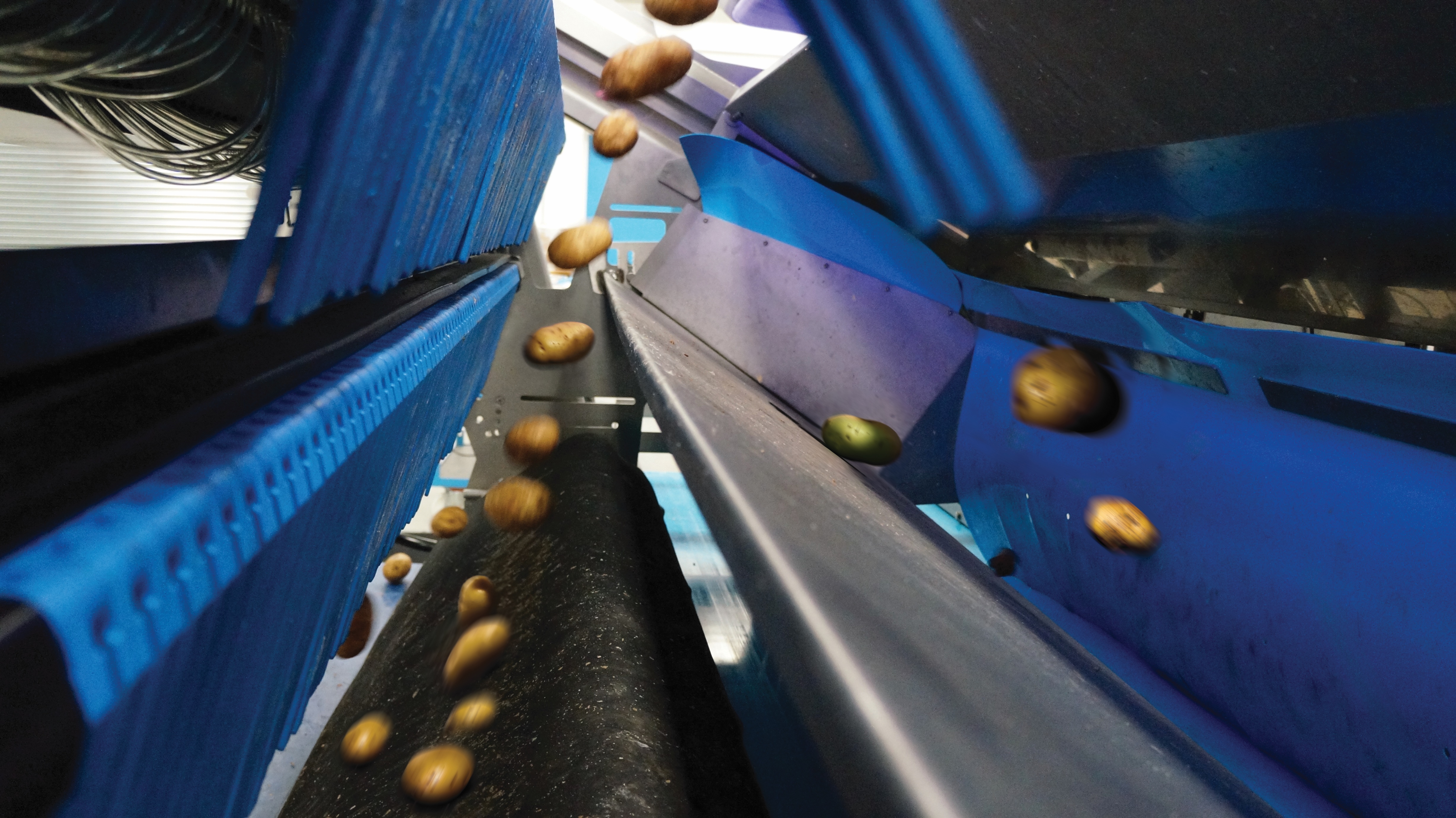
Deep dive: the TOMRA 5A imaging system
The TOMRA 5A (pictured above) uses what's called multispectral imaging to achieve 98%+ accuracy on foreign material detection. It’s the best foreign material elimination accuracy rate in the potato business to date.
How did we use multispectral imaging to achieve a 98%+ accuracy rate on foreign material removal and detection with the TOMRA 5A? We combined a custom TOMRA developed CCD line-scan camera, our Pulsed LED illumination, and artificial intelligence in the form of multivariate classification sorting.
The cameras used in the TOMRA 5A are designed and manufactured in-house by TOMRA specifically for improved infrared sensitivity. It was the first TOMRA-designed camera used in the food industry. And with many others deployed and under development it won’t be the last.
The pulsed LED illumination of the TOMRA 5A builds on multiple years of work within the potato sorting industry and the colors/wavelengths chosen across the visible and infrared have been tailored for maximum performance and are combined with an active backlight for accurate segmentation.
The final piece of the puzzle was the introduction of multivariate classification sorting. Multivariate classification is the term used for a collection of advanced computer vision techniques, but the principles are simple:
- The multi-spectral images captured on the TOMRA 5A are fed into our training software to teach the sorter the difference between potatoes and rocks, dirt, plastic, metal, or other plants.
- Rather than relying on color alone, the multi-spectral images of the TOMRA 5A considers color and material properties to make a quick decision.
Plus, we’ve trained the TOMRA 5A classifier database with thousands of foreign objects and potatoes, so you don’t have to.
More than meets the eye: behind our camera imaging systems
How do you distinguish a bruise from a blemish? What about rot? Or over ripeness? Or even find the piece of red plastic in your chopped tomatoes? The answer is infrared imaging, by looking beyond what our eyes can see we can create contrast where there was seemingly none before. This is known as multi-spectral imaging and is what sets TOMRA apart from the rest.
Both product and foreign material can take a variety of colors which can make sorting in bulk difficult, however when looking at the near infrared (NIR) image the differences become much clearer. Multi-spectral imaging allows TOMRA sorters to move beyond just color sorting and enables material sorting.
Multi-spectral imaging systems that use infrared imaging can also be used to inspect some internal defects/properties such as looking for bruises, ripeness, and other defects that remain invisible in the packhouse.
Explore TOMRA's camera system-equipped machines
.jpg?hash=710850f6c133d40d8a5491713393fd1347ac3fb0fadde7a53581b9fe085a5bdc&w=710&h=398&q=75&fit=crop&format=webp)
TOMRA 3A
Applications: Field Potatoes, Fresh Pack Potatoes, Onions, Beets
.jpg?hash=aadbf590d6bd4ba4413f12a036aa06dfc44027c4a3fe30086851834b999169b6&w=710&h=398&q=75&fit=crop&format=webp)
TOMRA 5A
Applications: Fresh Pack Potatoes, Beets, Brussel Sprouts, Peppers, Gherkins, Radishes, Peaches

TOMRA 5B
Applications: Berries, Cherries, Mangoes, Pineapple, Stonefruit, Dried Fruit, Diced Peaches, Pears and Tomatoes, Diced Peaches, Pears and Tomatoes, Almonds, Cashews, Hazelnuts, Peanuts, Raisins, Walnuts, French fries, Potato Crisps, Beans, Bell Peppers, Broccoli Carrots, Cauliflower, Corn, Garlic, Green Beans, Leafy Greens, Mushrooms, Onions, Peas, Gherkins, Radishes, Spinach

Spectrim with LUCAi™
Applications: Apples, Avocados, Citrus, Kiwifruits, Stonefruits

InVision² with LUCAi™
Applications: Cherries

Explore associated technologies
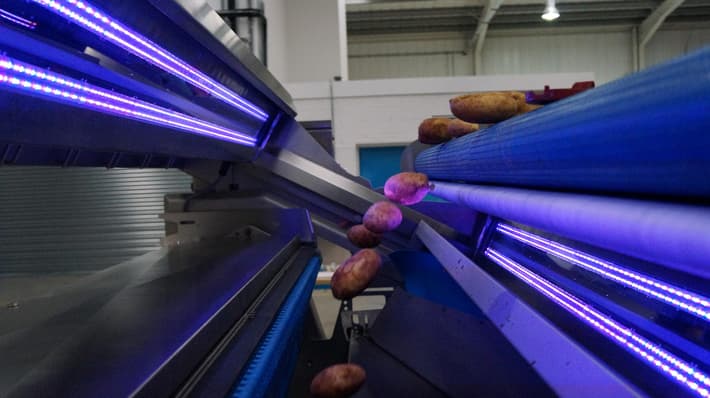
Air

Artificial Intelligence
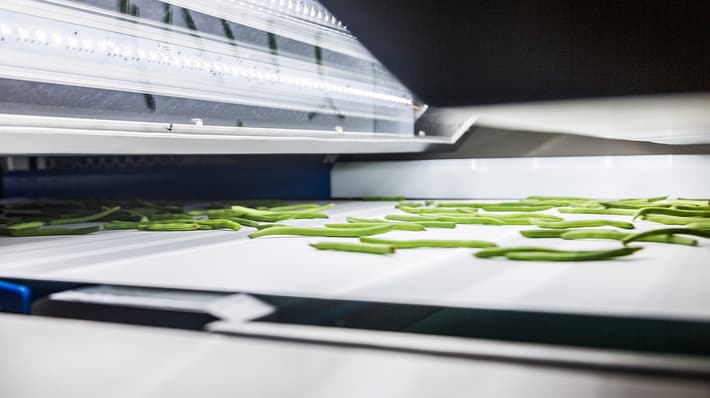
Belt

LUCAi™
